Women's Workouts
How to Start Pilates at Home: A Beginner 15-Minute Routine for Women
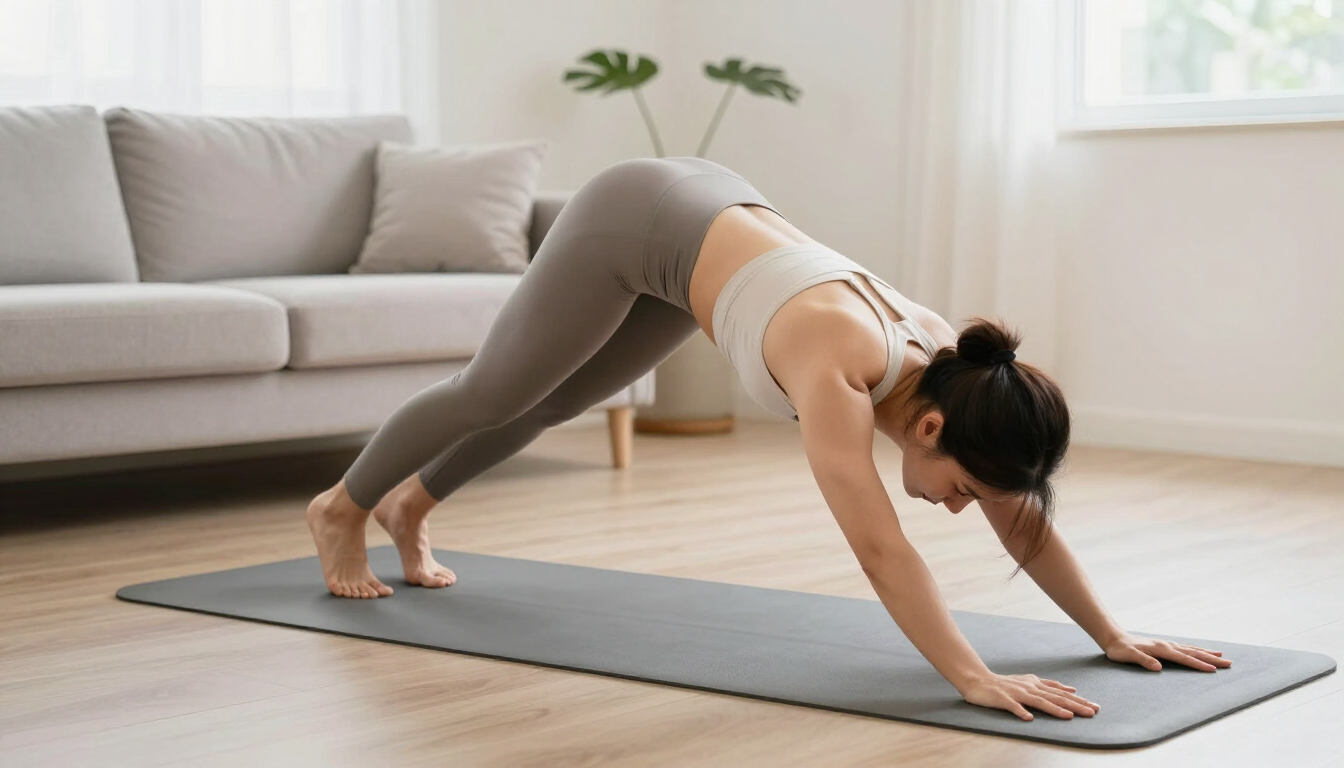
If you are new to Pilates, the biggest mistake is assuming you need a reformer, a studio membership, or an hour-long class before you can begin. You do not. A mat, enough floor space to lie down comfortably, and a short sequence you can perform with control are enough to learn the foundations.
A good beginner session is not about making every exercise look dramatic. It is about learning to keep your ribs, pelvis and breathing organized while your arms and legs move. That is why this routine starts with small, controlled movements and gradually asks for more coordination.
The short answer
For a true beginner, 15 minutes is enough for a useful practice session. It will not replace all of your weekly aerobic and strength activity, but it can be an effective way to practice core control, muscular endurance, mobility and movement quality.
What does beginner Pilates actually train?
Pilates is often marketed as a posture or “toning” method, but the more useful way to think about it is controlled resistance training with a strong emphasis on trunk organization, breathing and movement precision. Depending on the exercise, you are asking the abdominal wall, hips, back, shoulders and legs to create or resist motion while you maintain alignment.
- Core control: keeping the trunk stable while a limb moves.
- Muscular endurance: sustaining repeated low-to-moderate effort with good technique.
- Hip and shoulder control: moving from the joint without excessive twisting through the spine.
- Mobility: exploring a comfortable range rather than forcing a stretch.
- Body awareness: recognizing when the ribs flare, pelvis shifts, shoulders tense or breathing stops.
Research should not be oversold. In one 12-week controlled Pilates study, participants training twice per week improved abdominal endurance, hamstring flexibility and upper-body muscular endurance, while posture and balance changes were less clear. The useful lesson is that regular Pilates practice can improve specific fitness qualities, but it should not be presented as a guaranteed body-transformation shortcut.
What you need before you start
- A mat or carpeted floor.
- Enough space to extend your arms and legs without hitting furniture.
- Comfortable clothing that lets you move freely.
- A timer.
- Optional: a folded towel under the head or knees if that makes floor positions more comfortable.
Safety note
Safety note
- Stop any exercise that produces sharp, worsening or unusual pain, numbness, dizziness, chest pain or shortness of breath that feels out of proportion to the effort. If you are pregnant, recently postpartum, recovering from surgery, or managing a significant musculoskeletal or medical condition, individualized guidance may be more appropriate than a general beginner routine.
Want the complete structured program? This free routine shows the training style — the full program organizes the next four weeks for you. View the 28-Day Pilates Reset →
The 15-minute beginner Pilates routine
Move slowly enough that you can notice what your trunk is doing. Rest for 15-30 seconds whenever you need it. The goal is to finish feeling more coordinated, not destroyed.
| Exercise | Dose | Main cue |
|---|---|---|
| 1. Rib-expansion breathing | 60 sec | Inhale into the sides/back of the ribs. Exhale without forcefully pulling the belly inward. |
| 2. Pelvic tilt | 8 slow reps | Use a small range. Learn the difference between neutral and gently tucked positions. |
| 3. Knee fold / toe tap | 6-8 per side | Keep the pelvis quiet as one leg moves. Shorten the range if your back arches. |
| 4. Glute bridge | 10-12 reps | Press through the whole foot and finish with the glutes rather than the low back. |
| 5. Bird dog | 6 per side | Reach long without rotating the hips or lifting the leg excessively high. |
| 6. Side-lying leg lift | 8-10 per side | Keep the pelvis stacked; use a smaller range if your waist hikes. |
| 7. Easy spine stretch / breathing | 60-90 sec | Finish with relaxed breathing and a comfortable mobility range. |
Breathing is not a performance trick: use it to keep the ribs and pelvis organized while you move.
1) Rib-expansion breathing
Lie on your back with your knees bent or sit comfortably. Place your hands around the lower rib cage. Breathe in through the nose and imagine the ribs expanding sideways and slightly backward. Exhale slowly and let the ribs settle without aggressively “sucking in” the abdomen.
Common mistake: lifting the shoulders or forcing a huge breath. Keep the neck relaxed and make the breath smooth.
For toe taps, the useful range ends when you can no longer keep the trunk quiet.
2) Pelvic tilt and 3) knee fold / toe tap
A pelvic tilt is a small awareness drill. Gently tip the pelvis so the low-back arch decreases, then return to a comfortable neutral position. Do not squeeze the glutes hard or push the spine into the floor. For the toe tap, bring one hip to roughly a tabletop position, then lower the toes only as far as you can without the ribs popping up or the low back taking over.
Easier option: move one leg at a time from the floor instead of holding both legs up.
Glute bridge: lift until the trunk and thighs form a long line without over-arching the low back.
4) Glute bridge
Place the feet roughly hip-width apart. Exhale, press the floor away and lift the hips. Pause briefly at the top, then lower slowly. You should feel the glutes and back of the legs working. If you feel cramping in the hamstrings, bring the feet slightly closer and reduce the height of the lift.
Bird dog: think “reach long” rather than “lift high.”
5) Bird dog
Start on hands and knees. Reach one arm forward and the opposite leg backward. Imagine keeping a glass of water balanced across the back of your pelvis. If the hips rotate, shorten the reach. A six-inch reach with control is more useful than a dramatic range you cannot own.
6) Side-lying leg lift
Lie on your side with the hips and shoulders stacked. Keep the top leg long and lift it only until the pelvis wants to hike or roll backward. Lower with control. This is not a contest to get the leg as high as possible.
Want the complete structured program?
This free routine shows the training style. The full program organizes the next four weeks so you do not have to invent each session yourself.
View the 28-Day Pilates ResetHow should a beginner progress?
Progress does not have to mean adding difficult Pilates exercises every few days. Start by making the same movement cleaner. Once you can breathe normally and keep the trunk controlled, progress one variable at a time:
- Add 1-2 clean repetitions.
- Slow the lowering phase to about three seconds.
- Add a one- or two-second pause in the most challenging position.
- Increase the lever length - for example, moving a leg farther from the body.
- Choose a slightly more demanding variation only after the easier version feels controlled.
What “better posture” should mean
Pilates can help you practice trunk control and movement awareness, but posture is not one perfect shape that everyone must hold all day. A more useful goal is being able to move through different positions comfortably and control the position required for the task.
How often should beginners do Pilates?
Two to four short sessions per week is a reasonable starting range for many healthy beginners, depending on the rest of your activity. If Pilates is your only exercise, remember that public-health guidance also recommends aerobic activity and muscle-strengthening work across the major muscle groups. The U.S. Physical Activity Guidelines recommend 150-300 minutes of moderate aerobic activity per week plus muscle-strengthening activity on at least two days.
That does not mean every week must be perfect from Day 1. If you are currently inactive, a 15-minute routine is still a meaningful start. Build consistency first, then widen the plan.
Common beginner mistakes
| Mistake | What to do instead |
|---|---|
| Holding your breath | Use smaller ranges and keep the breath moving. |
| Trying to flatten the back in every exercise | Use the pelvis position appropriate to the movement; do not force one shape. |
| Moving fast to “feel the burn” | Slow down enough to know which joints are moving. |
| Chasing the biggest range | Use the largest range you can control without compensation. |
| Doing only abdominal exercises | Include hips, back, shoulders, legs, walking and broader strength work across the week. |
Frequently asked questions
Frequently Asked Questions
Prefer traditional strength training? Try our beginner full-body home workout for women — a 20-minute bodyweight session that pairs well with mat Pilates.
Get the Complete 28-Day Pilates Reset
Enjoyed this workout? The paid guide includes the full day-by-day calendar, progressive workouts, the complete exercise library, modifications, assessments and printable tracking tools.
Get the Complete 28-Day Pilates ResetReferences
- U.S. Department of Health and Human Services. Physical Activity Guidelines for Americans, 2nd edition. https://odphp.health.gov/our-work/nutrition-physical-activity/physical-activity-guidelines/current-guidelines/top-10-things-know
- Kloubec JA. Pilates for improvement of muscle endurance, flexibility, balance, and posture. J Strength Cond Res. 2010. PMID: 20145572. https://pubmed.ncbi.nlm.nih.gov/20145572/
- Cruz-Ferreira A, et al. A systematic review of the effects of Pilates method of exercise in healthy people. PMID: 22030232. https://pubmed.ncbi.nlm.nih.gov/22030232/