Macros and Nutrition
Started Creatine and the Scale Went Up? What That Early Weight Change Can Actually Mean
Written and fact checked by Muhammad Ali Akbar, MS-3, King Edward Medical University
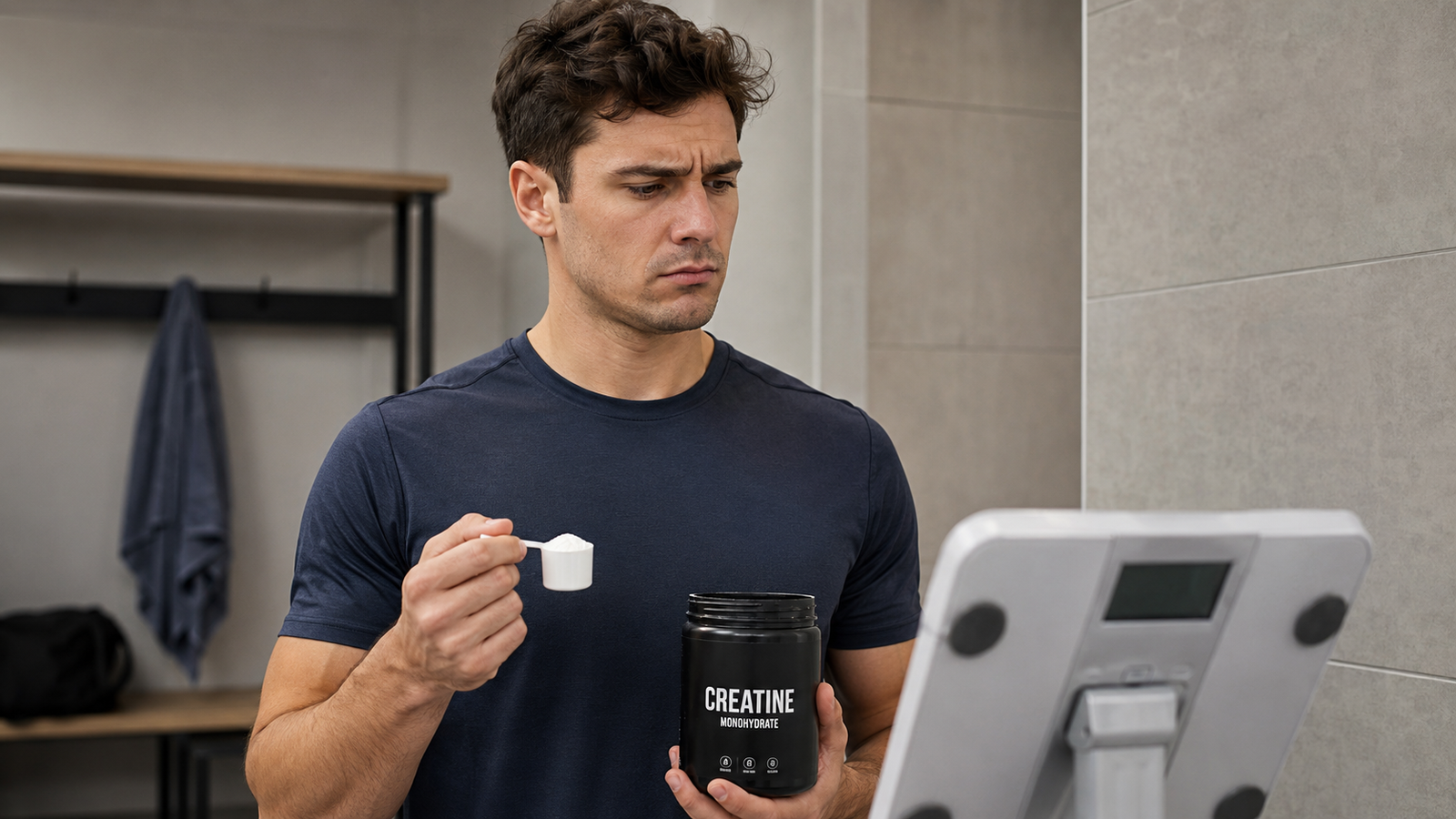
An early scale increase after starting creatine can happen without a matching increase in body fat. Water balance is the first place to look.
The confusing first week
You start creatine because it is one of the most studied sports supplements. A few days later, the scale moves up.
That can feel like the opposite of progress, especially if you are also trying to lose fat. The instinct is to blame the supplement—or assume the extra body weight must be fat.
Creatine can increase body water, particularly early in supplementation. That makes a short-term scale increase plausible even when calorie intake has not changed enough to explain a meaningful increase in stored body fat.
Why creatine can change water balance
Creatine is stored largely in skeletal muscle. It is osmotically active, meaning water movement is related to changes in creatine concentration.
Research summarized by the International Society of Sports Nutrition notes that early creatine supplementation can increase total body water, including intracellular water. This is one reason creatine users may notice a scale change in the first several days, particularly when using a loading phase.
The important distinction is that water stored with increased muscle creatine is not the same thing as body-fat gain.
Loading makes the early change more noticeable for some people
A traditional loading protocol uses a relatively high daily dose for several days before moving to a smaller maintenance dose. Loading saturates muscle creatine faster, so any associated change in body water may appear faster too.
Loading is not mandatory. Smaller daily doses can increase muscle creatine more gradually. For someone who dislikes seeing a sudden scale change, a no-loading approach may feel psychologically easier even though saturation takes longer.
The best protocol depends on preference, sport demands and individual tolerance.
What creatine is actually good for
Creatine monohydrate has extensive evidence supporting improvements in high-intensity exercise performance and resistance-training outcomes. It is not a fat-loss supplement and it is not a shortcut that replaces progressive training.
The scale can therefore create a strange situation: a supplement may be helping training performance while simultaneously making body weight temporarily less satisfying to look at.
That is why the goal of supplementation matters. If the goal is strength, power or training quality, a small water-related weight increase is not automatically a negative outcome.
How to tell water from a longer-term calorie problem
You cannot determine body composition from one weigh-in. Look for patterns.
If body weight rises quickly soon after starting creatine and then stabilizes while waist measurements and calorie intake remain consistent, water is a reasonable explanation.
If body weight continues to rise for many weeks, waist circumference is increasing and calorie intake is consistently above maintenance, the story is different. Creatine should not be used to explain away every long-term increase.
The same principle applies during fat loss: use weekly averages, waist measurements, training performance and adherence rather than reacting to one morning.
Do you need to stop creatine before a weigh-in?
That depends on why the number matters.
A person making weight for a combat or weight-class sport has a very different problem from someone checking progress in a general fitness program. Competitive weight manipulation should be managed carefully with qualified sports-nutrition and medical support.
For ordinary gym progress, stopping an effective supplement purely to make the scale display a smaller number may not make sense. Decide whether the number or the performance outcome is actually more important.
A safety note
Creatine monohydrate is generally well studied in healthy adults, but supplement decisions are not one-size-fits-all. People with kidney disease, complex medical conditions, pregnancy, or medications that affect renal function should discuss supplementation with an appropriate clinician.
Also remember that supplements are not regulated exactly like prescription medicines. Product quality and third-party testing matter.
The VELOFITZONE takeaway
If the scale rises shortly after you start creatine, do not assume you gained the same amount of body fat.
Early water retention is a known response. Watch the trend, keep your measurement conditions consistent, and judge creatine by the outcomes you started taking it for—training performance, strength and recovery—not by one number on the bathroom floor.
Build the rest of your plan with the Macro Calculator and How Much Protein Do I Need?.
References
- Antonio J, et al. Common questions and misconceptions about creatine supplementation: what does the scientific evidence really show?
- Kreider RB, et al. International Society of Sports Nutrition position stand: safety and efficacy of creatine supplementation in exercise, sport, and medicine.
- Cooper R, et al. Creatine supplementation with specific view to exercise/sports performance: an update.