Calories and Metabolism
The 10,000-Step Number Feels Official. It Isn’t a Magic Line — Here’s What Actually Matters
Written and fact checked by Muhammad Ali Akbar, MS-3, King Edward Medical University
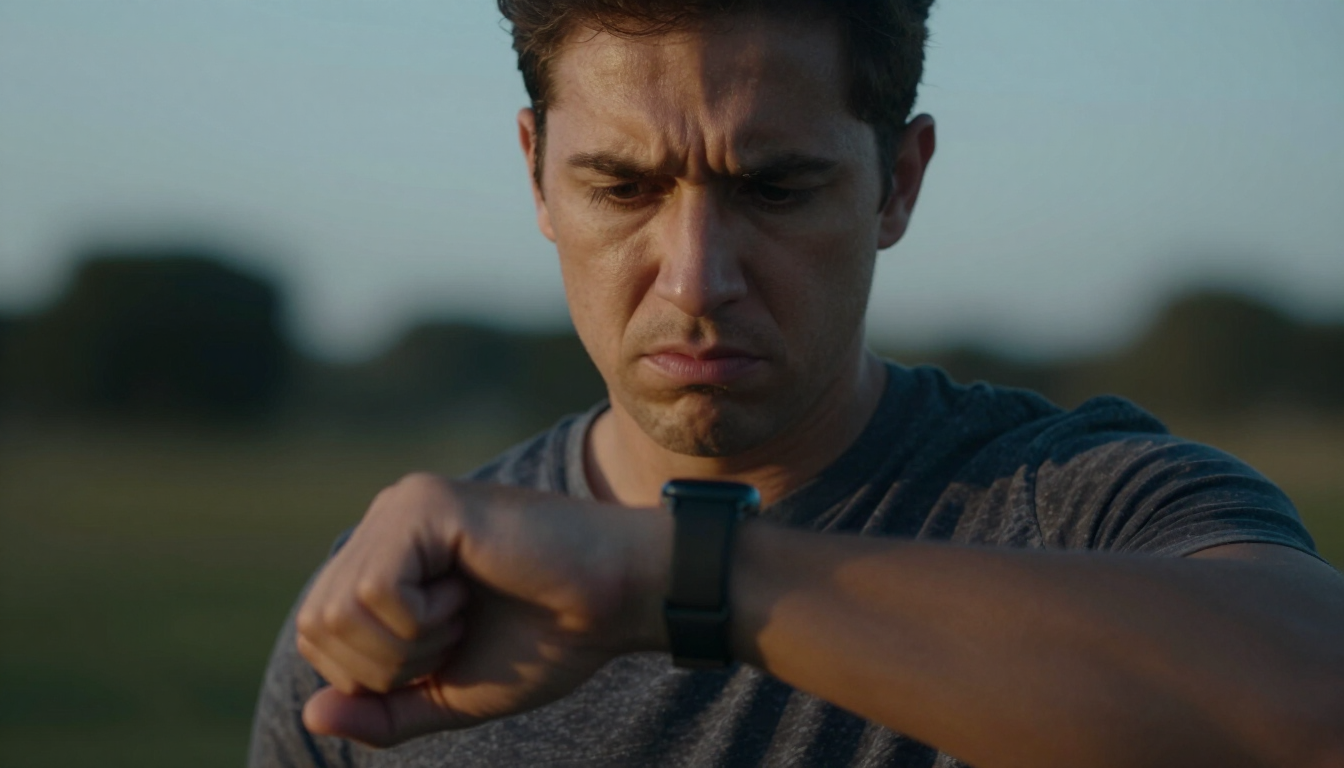
Ten thousand steps can be a useful goal. The evidence does not support treating 9,999 as failure and 10,000 as a biological switch.
Why missing the number by 300 steps can feel irrationally bad
A smartwatch says 9,742 steps at 10:30 p.m. Suddenly you are pacing around the kitchen because the day feels unfinished.
The behavior is understandable. Round numbers are psychologically powerful, and 10,000 is easy to remember. But your cardiovascular system does not reset the score at midnight because you stopped at 9,742.
The more useful question is not “Did I hit 10,000?” It is “Am I moving substantially more than I would otherwise?”
There is no universal 10,000-step requirement in U.S. physical-activity guidelines
The Physical Activity Guidelines for Americans focus on minutes and intensity of physical activity, not a universal daily step target. Adults are encouraged to accumulate 150 to 300 minutes of moderate-intensity aerobic activity per week, or an equivalent amount of vigorous activity, and to perform muscle-strengthening activity on at least two days.
The guidelines also emphasize a simpler message: move more and sit less.
That matters because walking is only one form of activity. Cycling, swimming, rowing and resistance training can contribute little to a step count while still providing substantial fitness benefits.
The health curve starts moving before 10,000
Large observational studies and meta-analyses have found that higher daily step counts are associated with lower risk of premature death and several chronic-disease outcomes. Importantly, the relationship is not a cliff at 10,000.
A 2025 systematic review and meta-analysis reported meaningful associations at step counts below 10,000, with roughly 7,000 steps per day emerging as a practical level associated with substantial health benefits across several outcomes compared with very low step counts.
That does not mean 7,000 is the new magic number. It means the curve is gradual.
More can still be useful
If you enjoy walking and 10,000 steps fits your life, there is no need to abandon it. Higher activity can provide additional benefits, especially when it replaces prolonged sitting.
The mistake is treating a threshold as binary. Someone who increases from 3,000 steps to 6,000 has made a major behavioral change even if a watch still labels the day as incomplete. Someone who already walks 12,000 steps may benefit more from improving sleep, strength training or exercise intensity than from chasing 15,000 simply because it is a larger number.
Age and baseline activity change the meaning of a step goal
A useful goal is relative to where you are starting. For a highly sedentary office worker, adding 1,500 to 2,000 steps per day can be meaningful. For an active delivery worker, 10,000 may happen automatically before lunch.
Older adults, people returning from injury and people with chronic conditions may need individualized targets based on ability and medical guidance. The step count should support the person—not become a rule that ignores context.
A better way to set your goal
Start by collecting a normal week without deliberately chasing a target. Find your average daily steps.
Then set a modest increase you can repeat. If your baseline is 4,200, a goal of 5,500 or 6,000 may be more useful than jumping immediately to 10,000 and failing four days out of seven.
Once the new level feels normal, reassess. The goal can rise, stay the same or be supplemented with structured exercise.
This approach turns steps into a behavior-change tool rather than a daily pass/fail exam.
Remember what the watch cannot see well
A step count does not tell you how hard the activity was, whether you trained your muscles, whether you spent the rest of the day sitting, or whether you are recovering adequately.
Two people can both record 8,000 steps while having very different fitness routines.
So keep the number in its lane. Steps are a convenient measure of ambulatory movement—not a complete fitness score.
The VELOFITZONE takeaway
Ten thousand steps is a memorable target, not a biological line in the pavement.
If it motivates you and fits your routine, use it. If it makes you feel as if a 9,700-step day was a failure, change the goal. Build from your baseline, move more consistently, include structured aerobic and resistance exercise, and judge the week rather than worshiping one round number.
See how activity fits your energy estimate with the TDEE Calculator, and learn how to label your activity in Am I Sedentary If I Work Out?.
References
- U.S. Department of Health and Human Services. Physical Activity Guidelines for Americans, 2nd edition.
- Ding D, et al. Daily steps and health outcomes in adults: a systematic review and dose-response meta-analysis.
- Paluch AE, et al. Daily steps and all-cause mortality: a meta-analysis of 15 international cohorts.
- Saint-Maurice PF, et al. Association of Daily Step Count and Step Intensity With Mortality Among US Adults.