Calorie Deficit and Weight Loss
You Lost Weight — Then Your Calorie Target Changed. Why Progress Can Make Dieting Feel Harder
Written and fact checked by Muhammad Ali Akbar, MS-3, King Edward Medical University
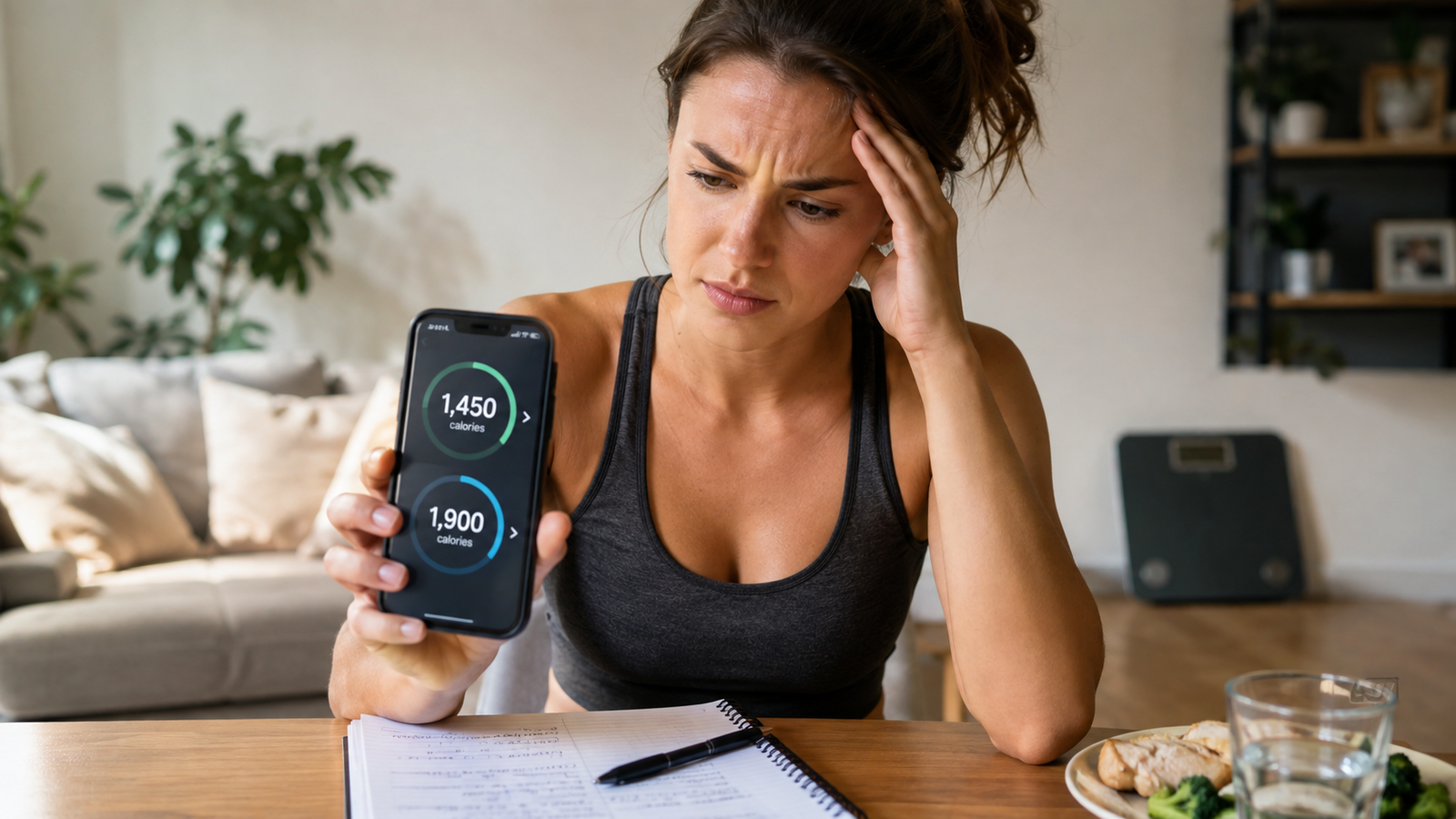
A lower calorie target after weight loss is not a punishment. It reflects a smaller body, changing movement costs and—in some cases—adaptive changes in energy expenditure.
The frustrating part of progress nobody celebrates
You do what the plan asked. Weight comes down. Clothes fit differently. Then the calculator gives you a lower maintenance number than it did at the beginning.
It can feel unfair: if the diet worked, why does the target get harder?
Part of the answer is simple physics and physiology. A smaller body generally requires less energy to maintain and move. Part of the answer can also involve behavioral and metabolic adaptations that occur during weight loss. The important thing is not to turn every lower number into evidence that your metabolism is “broken.”
A smaller body usually costs less energy to maintain
Resting-energy equations include body mass because larger bodies generally expend more energy at rest than smaller bodies. When body mass decreases, the predicted resting requirement often decreases too.
Movement can also cost less energy. Walking a mile at 190 pounds does not require exactly the same energy as walking the same mile at 165 pounds. If everything else stayed identical, a meaningful loss of body mass would still be expected to reduce total daily energy expenditure to some degree.
That is the predictable part.
Your routine may quietly change during a diet
The less obvious part is spontaneous movement. People often think only about formal exercise—gym sessions, runs or classes—but daily expenditure also includes non-exercise movement: walking around the house, standing, fidgeting, errands and countless small actions.
During prolonged energy restriction, some people move less without consciously deciding to. Training performance may drop. A person who used to take the stairs may start taking the elevator. None of these changes needs to be dramatic to affect total expenditure over a week.
This is one reason a maintenance estimate based only on body weight and “activity level” can miss what is happening in real life.
Metabolic adaptation is real—but it is often misunderstood
Research describes adaptive thermogenesis or metabolic adaptation as a reduction in energy expenditure beyond what would be predicted solely from changes in body size and composition. It can occur during weight loss, although its magnitude varies widely between people and studies.
That is different from the internet version of “starvation mode,” where the body supposedly stops losing fat despite a sustained energy deficit. Energy balance still matters. Adaptation means the gap between expected and actual expenditure can become smaller, making the same intake produce slower progress than it did earlier.
The practical implication is modest: recalibration may be necessary. The implication is not that your metabolism has been permanently destroyed.
Why hunger can rise while calorie needs fall
Weight loss is not only an energy-expenditure story. Appetite can become more persistent too. A lower body weight may require fewer calories to maintain while the drive to eat becomes stronger.
That combination explains why later stages of dieting can feel harder even when the plan looks similar on paper. The same food environment that was manageable in week two may feel far more demanding in week twelve.
This is a strong argument for a diet built around satiety, protein, fiber, minimally processed foods you enjoy, adequate sleep and a sustainable pace—not just a mathematically aggressive deficit.
When should you actually recalculate?
You do not need to change your calorie target every time the scale moves by one pound. Daily fluctuations are too noisy.
A recalculation makes more sense after a meaningful change in body weight, a major change in activity or a genuine plateau confirmed across several weeks. Even then, treat the new number as a starting estimate.
If your average weight is still moving at an appropriate rate and you feel reasonably well, there may be no reason to “fix” a plan that is working just because a calculator changed by 80 calories.
Protect the things that make the diet easier to maintain
When intake needs to change, the first instinct is often to cut food aggressively. A better question is whether the entire system is still supporting the goal.
Resistance training helps preserve strength and lean tissue during weight loss. Adequate protein supports muscle retention and satiety. Keeping daily movement reasonably consistent reduces the chance that a lower step count silently erases part of the intended deficit.
And if the plan has become psychologically or physically difficult to sustain, the correct response may be a maintenance phase or a slower rate of loss—not a more punishing deficit.
The VELOFITZONE takeaway
If your estimated calorie needs decline after weight loss, that does not mean success has damaged you. A lighter body generally uses less energy, activity can shift, and metabolic adaptation can contribute.
Use calculators to update the map, not to dictate every step. Track your real trend, keep training and protein consistent, and make small adjustments only when the data—not one bad day—show that an adjustment is needed.
Recalculate with the Calorie Calculator or TDEE Calculator, and troubleshoot a stall in Why Weight Loss Stalls.